The Surprising Signs of Mastitis in Dogs (and How to Help Your Nursing Dog Feel Better)
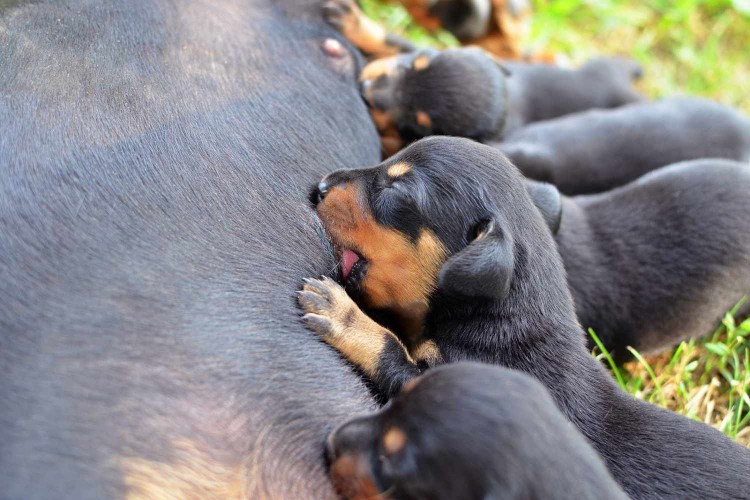
A mama dog lying on her side, contentedly nursing her tiny, wiggling puppies, is a heartwarming scene. Mastitis in dogs, though, can make nursing an uncomfortable experience for both mama and her puppies.
Mastitis affects the mammary glands and can quickly worsen. If your dog is pregnant or nursing, take some time to learn about what mastitis looks like and how it's diagnosed and treated.
What is Mastitis?
Mastitis is inflammation of the mammary glands within the breast area. It most commonly affects female dogs who have recently given birth. Although uncommon, mastitis can occur in female dogs who are not pregnant but have false pregnancies.
Mastitis is generally classified as acute (quick onset) or chronic (slow onset) and may affect one or multiple mammary glands.
Causes of Mastitis in Dogs
Bacteria, including Escherichia coli, Staphylococcus sp., or Streptococcus sp., are the most common cause of mastitis in dogs. But how do the bacteria get into the mammary gland and cause infection and inflammation?
Bacteria can gain entry in several ways. For example, nipple trauma from a puppy's sharp teeth and nails creates an open wound and entryway for bacteria. Also, a dirty birthing environment contains bacteria that can gain entry while a puppy nurses.
Signs and Symptoms of Mastitis in Dogs
The early stage of mastitis in dogs is not very obvious. The pups' weight progression might be a clue: mastitis can prevent puppies from nursing well, and they won't gain enough weight. Other early signs are slight swelling and inflammation of the breasts and mild discomfort.
As mastitis progresses, the signs and symptoms become more apparent:
- Decreased milk production
- Change in milk appearance: blood or pus; thick, cloudy consistency
- Blood or pus oozing from the nipples
- Ulceration of affected breast(s)
- Firm, warm, visibly swollen, red or purple, and painful breasts
Severe mastitis makes dogs extremely ill because the bacteria in the mammary glands has entered the bloodstream. Signs of severe mastitis in dogs include:
- Vomiting
- Lethargy
- Anorexia
- Fever
- Dehydration
- Shock
- Weight loss
Diagnosing Mastitis in Dogs
Diagnosing mastitis involves a physical examination and diagnostic testing. Your veterinarian will get a history of the problem from you, including when you first noticed the mastitis symptoms and what those symptoms were.
Your vet will then express some milk from an affected breast and use a microscope to look for bacteria or inflammatory cells in the milk. They may also perform a milk culture to identify the specific bacteria in the milk. Bloodwork will determine if the bacteria causing the mastitis has entered your dog's bloodstream.
How to Treat Mastitis in Dogs
Mastitis requires prompt veterinary treatment. Mild to moderate mastitis can be treated at home, while severe mastitis needs hospitalization.
At-Home Treatment
Oral antibiotics will kill the bacteria in the mammary glands. Your veterinarian will prescribe an antibiotic that will not pass through the milk. Always administer the entire course of antibiotics to ensure that all bacteria are killed. Pain and anti-inflammatory medications will reduce pain and inflammation in the breasts.
Can You Give a Dog Tylenol?
Home remedies for mastitis include cabbage leaves and hand milking. Cabbage leaves help to reduce pain and inflammation. Your veterinarian will advise you to wrap two cabbage leaves together and apply them to the affected breasts like a compress, changing them every few hours.
Perform hand milking of the affected breasts as often as your veterinarian recommends. Observe if the milk's appearance is returning to normal. Also check the affected breasts' appearance to determine if the inflammation is going down.
Pups should be allowed to nurse during treatment. Weigh the pups daily and notify your veterinarian if the pups are not gaining weight or you notice any changes in their behavior or the appearance of their poop.
In-Hospital Treatment
Hospital treatments for mastitis in dogs include:
- Intravenous fluids
- Aggressive antibiotic treatment
- Surgical removal of breasts, if the mammary tissue has died
If puppies aren't able to nurse adequately, they may need to be supplemented with formula to help them gain weight.
The breasts typically recover within 2-3 weeks with mild to moderate mastitis. Severe mastitis has a longer recovery time.
Preventing Mastitis in Dogs
There are several strategies for preventing mastitis in dogs:
- Immediately remove and clean any soiled bedding.
- Clip the puppies' nails to prevent scratching during nursing.
- Shave the hair around the breasts to reduce bacteria buildup.
- Encourage pups to nurse equally from all nipples.
- Wipe the breasts regularly to keep them clean.
If your dog is nursing, keep a close eye out for signs of mastitis. If you think your dog has mastitis, take her to your vet right away for proper diagnosis and treatment.